




Case study
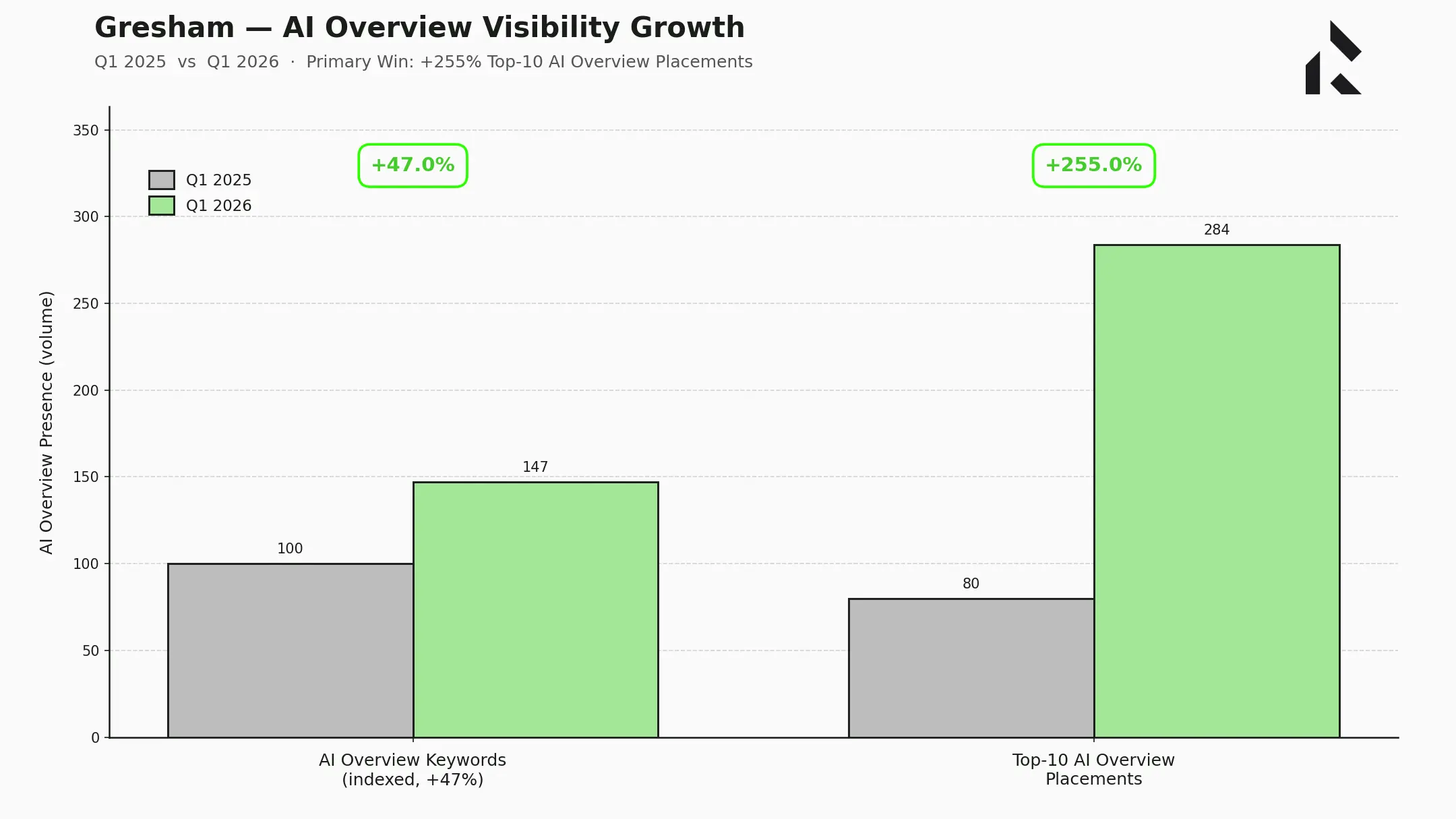
Rayze grew Gresham's AI Overview visibility by 255%

We have built a great partnership with the Rayze team. We have been on a massive journey together, integrating two companies, mapping the new SEO landscape, and tracking an elevated level of efficiency required for PE. We challenge each other to think differently and that in turn improves our execution and performance.






We have built a great partnership with the Rayze team. We have been on a massive journey together, integrating two companies, mapping the new SEO landscape, and tracking an elevated level of efficiency required for PE. We challenge each other to think differently and that in turn improves our execution and performance.
More than 50% of the quality leads we were receiving came from our SEO program and delivered significant ROI for the business. Yas, Christy and the team are at the forefront of SEO practice. AI Overviews, GEO vs SEO, guided content, market and competitor analysis, dashboards that really are easy to use. Easy to communicate with, responsive and results-driven.

Working with Rayze was a smooth and positive experience from day one. Yaser and his team were proactive, open, and clearly knew their stuff. They kept us in the loop with regular updates and clear reports, and were quick to respond to any questions we had along the way. Their support across technical SEO, on-page improvements and content planning was well thought through and made a real difference. If you’re looking for a team that’s collaborative, flexible and easy to work with, Yaser UK is a solid choice.

We’re very thankful to Yaser and his team for building a fully-functioning website for our business. A very skilled and dedicated team of professionals is behind this marketing agency. Their attention to detail, analytical skills, and ability to work under pressure was truly remarkable.

Working with Yaser has been an outstanding decision for our company. Our website traffic experienced an impressive growth of over 100% in just 8 months through organic SEO.
Frequently asked questions around GEO.
Most brands begin to see improved citation frequency and AI answer mentions within approximately four to eight months. GEO is iterative — the results compound over time.
GEO — generative engine optimisation — is the process of making your brand more likely to be cited and recommended by AI tools like ChatGPT, Claude, Gemini, and Google AI Overview. GEO is achieved through content production, technical optimisation and implementing authority signals across the site.
GEO is Generative Engine Optimisation, the process of optimising your site for AI visibility. AEO is Answer Engine Optimisation, the process of optimising your site to become the primary cited source on LLMs.
In short, GEO and AEO are the same. The goal of both is to improve AI visibility and help you become the answer in LLMs.
Where SEO helps you rank in traditional search results, GEO and AEO help you appear in the actual answers AI tools give your customers.
No, they serve different purposes and work best together. SEO builds the technical and content foundations that help search engines find and rank your site. GEO builds the authority and clarity that helps AI tools cite and recommend your brand. One supports the other.
GEO does not replace SEO — it extends it. The fundamentals of search (authority, clarity, trust, technical soundness) remain the same. What GEO adds is the optimisation layer that determines how your brand appears in the AI-generated answers that are increasingly shaping how people discover products and services.
GEO agency services in the UK can cost between £2,500 and £10,000, depending on the scope of the requirement.

.png)